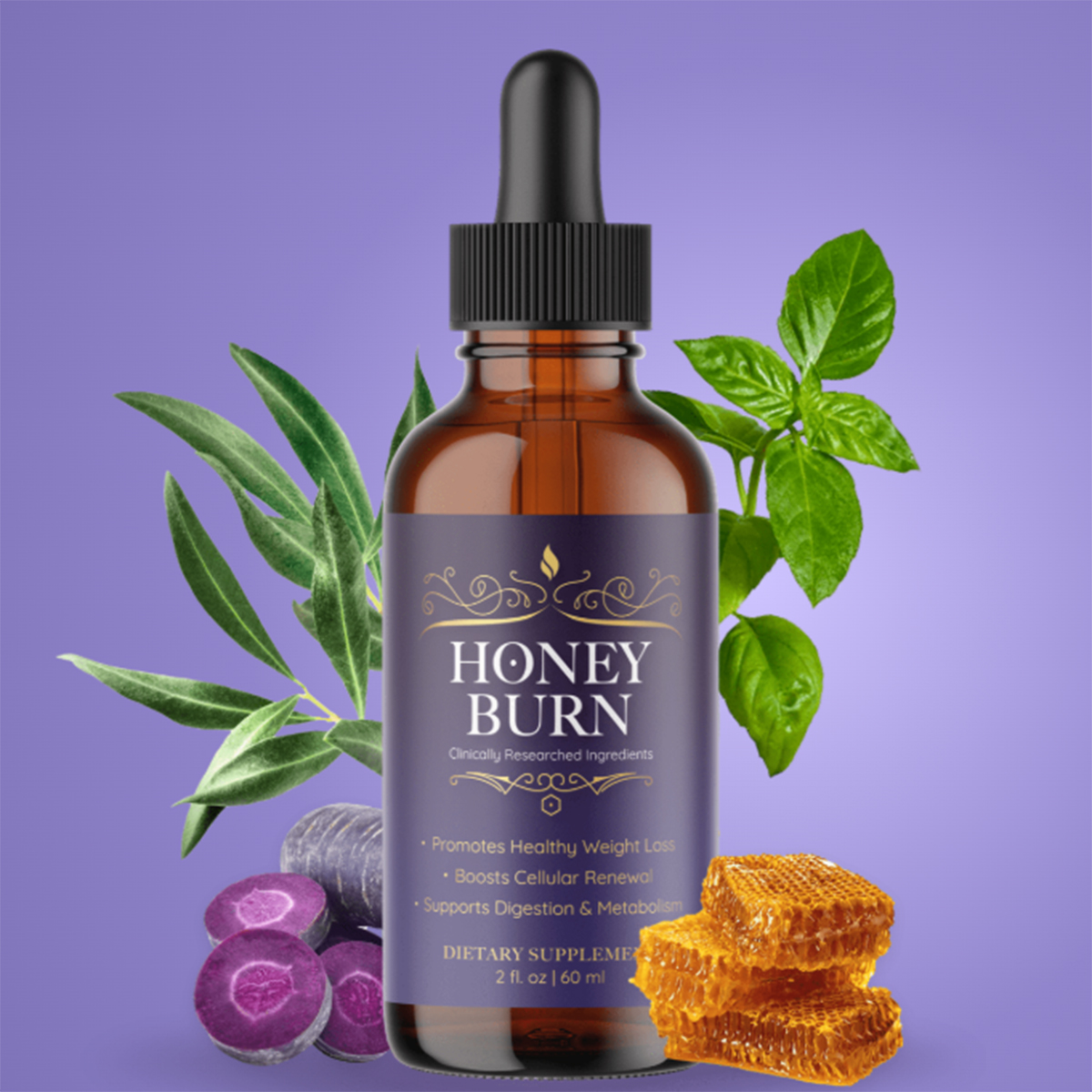
Why people search HoneyBurn reviews in the first place
People landing on a HoneyBurn review rarely want only one thing. Some are trying to understand what the product actually is. Others want to know whether the formula is clearly named, whether the support pages look complete, whether shipping and refunds are easy to verify, and whether the headline claims are backed by more than energetic copy. That mix of intent is exactly why a review page should not behave like a sales page.
In HoneyBurn’s case, the public material is unusually confident in its framing. The product is marketed as a honey-based formula aimed at weight management, with repeated emphasis on a “purple honey” concept and on lipase as the mechanism the formula is supposed to support. That gives readers a clear story very quickly. What readers still need, however, is a calmer read of what is actually visible beyond the headline promises.
This is where the review angle matters. Instead of repeating broad claims, a useful HoneyBurn review should ask more practical questions: is the format clear, are the ingredients named, do the support pages explain shipping and refunds in a usable way, and are there any gaps between the main pitch and the more detailed public information? Those are the questions that help someone decide whether to move on to the fuller product guide.
What the public-facing HoneyBurn pages make clear
The public product pages present HoneyBurn as a liquid supplement rather than a capsule or powder. The wording repeatedly frames it as a honey-based formula for weight-management support, with lipase mentioned as a central part of the product story. The official materials also describe the product as easy to use with a dropper format, and public FAQ material says it may be taken directly or added to a preferred beverage.
Beyond the front-end sales framing, the support pages do provide several practical details that many generic review pages skip. Publicly visible material describes a 60-day refund window counted from delivery, outlines return instructions, and notes that return shipping costs are not covered. The shipping policy page also lists free shipping for the United States and named fees for some international destinations, including Canada, the UK and Ireland, and Australia and New Zealand. That is useful because it gives readers something concrete to verify before thinking about checkout.
Support visibility is also stronger than on many low-information supplement pages. Public pages list a product support email, ClickBank order support, and phone numbers for order-related help. That does not settle every legitimacy question by itself, but it does mean the public support layer is not invisible, which is often one of the first things careful readers check when they search for HoneyBurn reviews.
| Public format |
Liquid dropper-style supplement framed around a honey-based formula. |
| Usage language |
Public FAQ material describes one serving in the morning and one at night, taken directly or added to a drink. |
| Refund visibility |
Public refund page describes a 60-day window from delivery and a return-by-mail process. |
| Shipping visibility |
Public shipping page lists free U.S. shipping and named fees/timelines for several international regions. |
| Support visibility |
Product support email, ClickBank order support, and phone contact options are publicly shown. |
Want the fuller page that focuses on how the HoneyBurn purchase path is structured inside this project?
What seems clear, and what still deserves a closer check
What seems clear from the public material
- HoneyBurn is publicly positioned as a honey-based liquid weight-management supplement, not a generic capsule formula.
- The product story repeatedly centers a lipase-focused mechanism and a “purple honey” concept, so the public-facing positioning is consistent.
- The public pages do show practical support details, including shipping notes, refund instructions, email support, and order-support pathways.
- The formula is named with enough specificity to give readers a real ingredients starting point instead of a completely opaque label story.
What still needs checking or more careful reading
- How much weight a reader should give the lipase-centered sales narrative versus the more limited public verification available.
- How clearly exact dosage context is presented at the time of reading, especially for readers comparing ingredient labels closely.
- Whether the buyer is comfortable with the practical refund steps, including returning all bottles and paying return shipping.
- Whether the product story feels persuasive because of presentation style alone, rather than because every major claim is equally easy to verify.
That distinction is the core of this HoneyBurn review. The public-facing material is not empty; it actually provides more usable support information than many thin affiliate-style pages. At the same time, the strongest claims still arrive through promotional framing first. Readers who want a cleaner decision process should therefore treat HoneyBurn as a product with visible practical information and a very assertive marketing layer, then decide whether they want to move to the fuller guide for purchase-path context.
Practical notes before going further
If someone searches HoneyBurn reviews because they are trying to sort signal from noise, the most useful next step is usually not a yes-or-no verdict. It is a short checklist. First, confirm that the current public pages still show the ingredients, support contacts, shipping details, and refund steps you expect. Second, read the refund instructions carefully rather than assuming “60-day guarantee” means a frictionless process. Third, separate the distinctive product story from the practical buyer information; they are related, but they are not the same thing.
That approach keeps the page useful without turning it into either a warning post or a sales funnel. HoneyBurn may look more concrete than some low-quality offers because the public support layer is visible and the product presentation is specific. Even so, readers are usually best served by moving from this review to a more structured guide rather than making a decision from headline copy alone.
HoneyBurn review FAQ
- What is HoneyBurn in simple review terms?
It is publicly presented as a liquid honey-based supplement aimed at weight-management support, with the main sales narrative centered on a lipase-focused mechanism and a “purple honey” identity.
- Are HoneyBurn ingredients visible on public pages?
Yes. Public-facing material names ingredients including kudzu, berberine extract, wild raspberry, raw wildflower honey, holy basil, olive leaves, bee pollen, royal jelly, sodium alginate, carrot powder, and propolis.
- Does the public material show shipping and refund information?
Yes. Public support pages describe shipping timelines and fees for several regions, and they also describe a 60-day refund window counted from delivery together with return steps.
- Does this review say HoneyBurn definitely works or definitely does not?
No. This page is built to clarify what is visible, what is practical to verify, and what still deserves a closer look before a reader treats the sales claims as settled.
Bottom line of this HoneyBurn review
HoneyBurn’s public materials are strong on product identity, reasonably clear on support logistics, and more specific than many thin review-style pages that simply recycle hype. That is the good news for readers who want something concrete to inspect. The more cautious takeaway is that the strongest promises still sit inside promotional framing, so the best use of this page is as an orientation layer: understand the product story, verify the practical terms, and then move to the fuller guide if you want the purchase-path context laid out cleanly.
If that is your next step, the guide below is the better page to continue with inside this project. It is built for the deeper buying-path questions that do not belong at the center of a review page.
Ready to move from review context to the fuller HoneyBurn guide?
← Back to Weight Loss