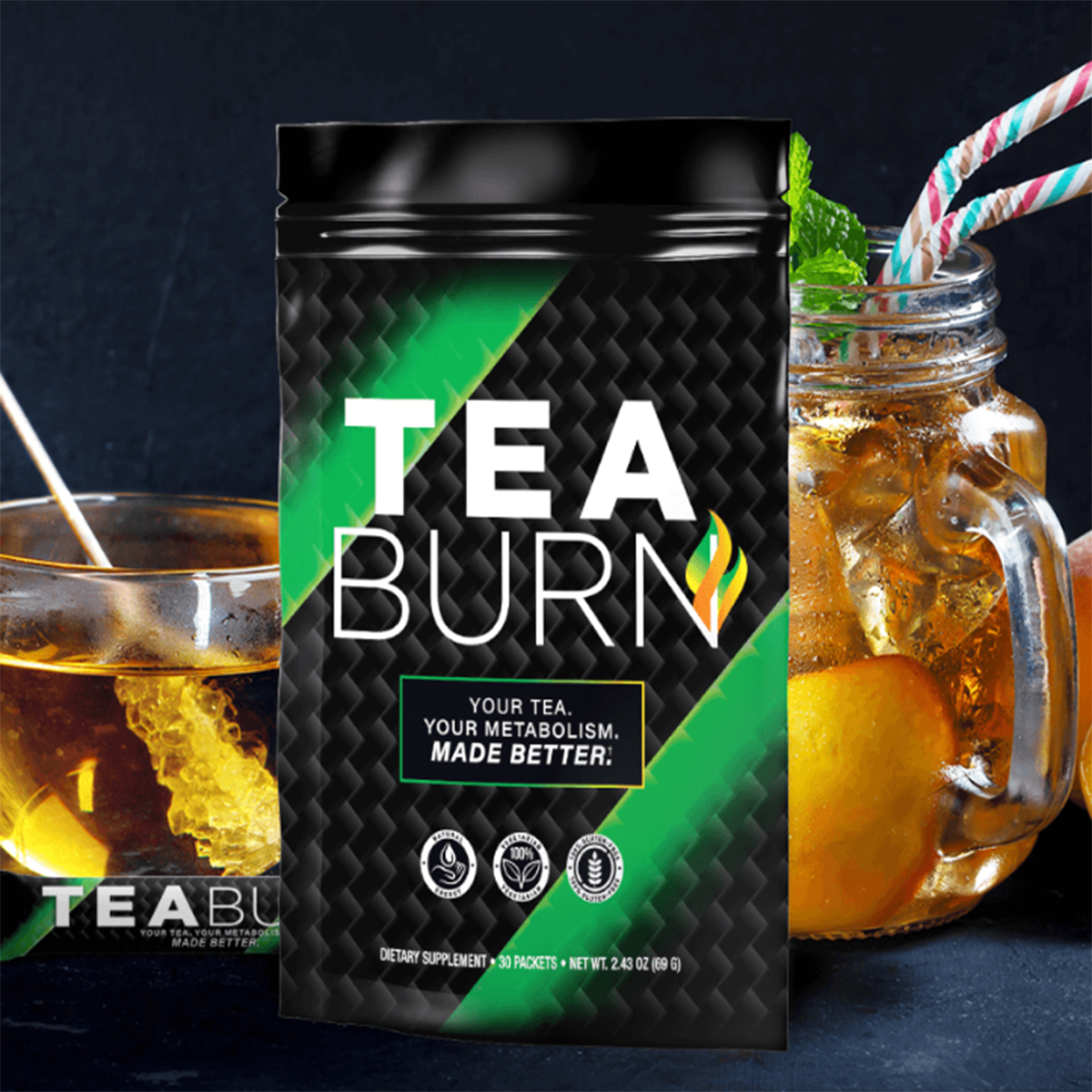
What Tea Burn appears to be on its public-facing page
Tea Burn is presented as a single-serve formula that can be added to tea without changing taste, smell, or texture. The public sales page frames it as a simple add-on to an existing tea habit rather than as a separate beverage or meal plan. That matters for review intent because it explains why many searchers are not just looking for an ingredient list; they are trying to understand what the product actually is and how it is supposed to fit into a routine.
The visible marketing language is strong and repetitive. It centers on themes such as metabolism, fat-burning, calm energy, reduced hunger, and overall well-being. A careful Tea Burn review should separate those promotional claims from the narrower set of details that can be checked directly on the page, such as how the product is described, which ingredients are named, how it is used, and what refund or shipping language is publicly displayed.
From that angle, Tea Burn is less a mystery product than a clearly positioned weight-loss supplement with a tea-based framing. What readers still need from a review is not more excitement, but more structure: what is visible, what is implied, and what remains less clear after reading the page closely.
Why people search for a Tea Burn review
Most Tea Burn review searches are not just looking for a sales pitch in different words. They usually signal a more practical set of questions: What exactly is being sold here? Are the ingredients clearly named? Does the page look transparent about shipping, guarantees, and support? Is the “legit” question being answered with actual details, or mainly with confident copy?
That is why the useful middle ground for this page is editorial rather than transactional. It should help a reader filter the public material, not replace the full buying guide and not mimic a checkout page. Tea Burn has enough visible product information to support that kind of review: ingredient names are displayed, directions are present, shipping windows are described, contact links are available, and the refund message is very prominent. At the same time, there are a few wording issues and internal inconsistencies that make a more careful read worthwhile.
What can be verified directly from the visible page
- The product is publicly described as a tasteless formula that dissolves into tea and can be used with hot or cold tea.
- The page visibly highlights Chlorogenic Acid, Camellia Sinensis, Chromium, L-Carnitine, L-Theanine, and a Vitamin Complex.
- Usage directions state that one serving is added to tea daily, and the FAQ says it can be taken at any time of day.
- The public page shows package options built around 2-bottle, 3-bottle, and 6-bottle configurations, with free shipping specifically emphasized for the 6-bottle option.
- Shipping language on the FAQ mentions estimated delivery windows for the US and Canada, separate timing for international orders, and rush shipping availability.
- The page also says billing is a one-time payment and not an auto-ship program.
- Support and policy paths are visible through Terms, Privacy, and Contact links, with support@teaburn.com shown in the FAQ/contacts area.
- A 60-day money-back promise is repeated prominently across the page and in the FAQ area.
Tea Burn ingredients and formula notes
For Tea Burn review intent, the ingredient section is one of the strongest parts of the public page because it gives the reader something concrete to work with. The product page names Chlorogenic Acid, Camellia Sinensis, Chromium, L-Carnitine, L-Theanine, and a Vitamin Complex. That visible list is useful because many competing review pages drift into vague promises without even grounding the discussion in what the product says it contains.
Still, an editorial read should stay disciplined. The fact that ingredient names are shown does not automatically validate every broader claim made around the product. What it does do is clarify the formula theme the brand wants to emphasize: metabolism support, energy support, and weight-management framing tied to regular tea consumption. For a reader comparing Tea Burn against other weight-loss supplements, that visible positioning is arguably more useful than long blocks of recycled ingredient praise.
Another reason this matters is that the public materials repeatedly connect the formula to ease of use. The “tasteless” and “dissolves instantly” language is not just decorative copy; it is part of how the product is differentiated. In other words, the formula is marketed not only as something to take, but as something designed to slide into a familiar daily habit with minimal friction.
What seems clear, and what still needs checking
What seems clear
- Tea Burn is positioned as a tea-compatible formula rather than as a standalone shake, capsule, or meal-replacement concept.
- The page is explicit about the core marketing themes: metabolism, fat-burning support, energy, and overall well-being.
- The ingredient names are visible enough for a reader to identify the broad formula profile without guessing.
- Shipping, refund language, one-time payment wording, and support paths are public enough to answer several basic legitimacy questions.
What still needs checking
- One FAQ entry refers to Tea Burn as a “serum” even though the rest of the page mainly describes servings or packets mixed into tea.
- One ingredient-area sentence says the nutrients work with “coffee,” which reads like template carryover rather than careful product-specific editing.
- The refund messaging is prominent, but readers may still want to confirm return handling details and order-specific instructions on the official documents.
- Public-facing safety language is highly confident, so cautious readers may prefer to rely on the visible label and official policy pages instead of marketing tone alone.
Public support, shipping, and policy notes
This is where Tea Burn review intent often overlaps with “what to know” searches. The public page gives enough practical information to matter: shipping estimates are described, support contact paths are visible, and the one-time-payment wording is unusually direct. That helps because a lot of thin review pages talk about “trust” in the abstract while barely mentioning visible support or order terms at all.
At the same time, this section should stay brief. Tea Burn is still better served by a dedicated buying guide when someone wants the full purchase-flow view. Here, the role of the review is simply to note that the public page does not hide the basics: package structure is visible, a guarantee is repeated several times, and support links are easy to find. That does not settle every question, but it does give a reader a more concrete basis for deciding whether to keep digging.
Bottom line before moving further
As a Tea Burn review page, the strongest conclusion is a practical one: the public-facing materials make the formula theme, usage model, and core promises easy to identify, and they also give readers visible shipping, guarantee, and support information. That is enough to move beyond empty speculation.
The main caution is not that the page lacks product details altogether. It is that some wording on the sales page is more polished than precise, and a few visible inconsistencies make it worth checking the buying-guide view before treating every claim as equally reliable. For readers searching Tea Burn reviews, that is usually the most useful middle position: not blind trust, not theatrical skepticism, but a cleaner reading of what is actually on the page.
Tea Burn review FAQ
What is Tea Burn in simple terms?
Based on the public-facing materials, Tea Burn is presented as a tasteless formula meant to be mixed into tea, with marketing focused on metabolism support and everyday weight-management positioning.
Are Tea Burn ingredients shown publicly?
Yes. The page visibly names several highlighted ingredients, including Chlorogenic Acid, Camellia Sinensis, Chromium, L-Carnitine, L-Theanine, and a Vitamin Complex.
Does the Tea Burn page show shipping and refund information?
Yes. The page includes visible shipping estimates, a strong 60-day refund message, and wording that says the order is a one-time payment rather than an auto-ship plan.
Why do some readers still want another check before buying?
Because review intent is not just about seeing claims. It is also about checking whether the page is internally consistent, how clearly support and policy details are presented, and whether the public copy stays precise from section to section.
← Back to Weight Loss