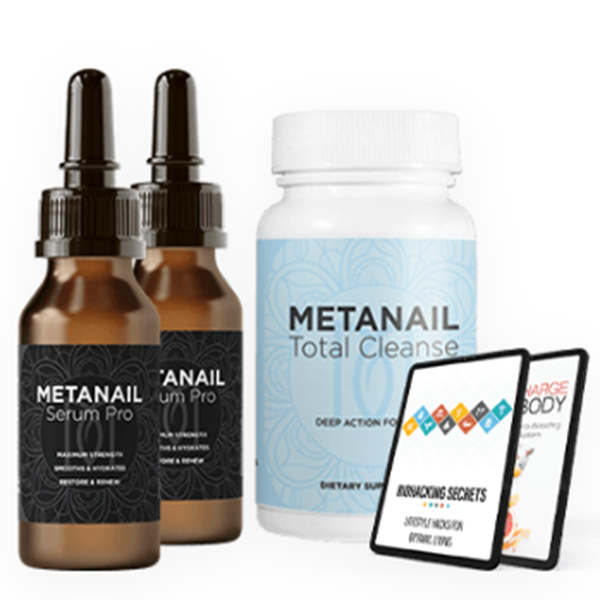
What the public product pages appear to show
At the moment, the visible product materials present the item under closely related naming, including Metanail Complex and Metanail Serum Pro. That naming overlap does not automatically mean anything is wrong, but it is worth noticing because careful readers often use consistency as a trust signal. In practical terms, the page behaves like a classic direct-response product page: there is a large promise-led introduction, repeated urgency language, testimonial-style blocks, a formula section, a refund FAQ, and a checkout route.
For a review reader, the most useful part is not the hype but the concrete information embedded inside that layout. The visible materials do disclose a specific ingredient list, they describe the product as a topical serum applied to clean nails and surrounding skin, and they include public statements about shipping timing, refund duration, and one-time checkout rather than recurring billing. Those are the points worth extracting first.
Just as important, the public-facing materials lean heavily on duplicated testimonial formatting and scarcity wording. That does not invalidate the product, but it does mean a review should not simply repeat the sales tone. A better reading is to separate what can be confirmed visually from what is being asserted to persuade the buyer.
What seems clear from the visible materials
It is presented as a topical serum
The seller page describes direct application to nails and surrounding skin, usually morning and evening, rather than a capsule-style routine.
A named formula is publicly listed
The page does not hide the ingredient names. That matters because many weak review pages talk around the formula without showing what is actually listed.
Refund language is visible
The public FAQ currently states a 60-day refund window, which gives readers a concrete policy point to verify before buying.
The page is built around nail and foot appearance claims
Most of the visible messaging focuses on healthier-looking nails, smoother surrounding skin, and daily nail-care support rather than on a narrow single-purpose claim.
What still needs checking before treating this as a strong review signal
Naming consistency
Readers may want to notice when the page alternates between Metanail Complex and Metanail Serum Pro, then confirm they are looking at the intended product path.
Marketing pressure vs. evidence
Urgency banners and repeated testimonials are marketing devices. They do not answer the harder question of how outcomes are validated in independent settings.
Limited public discussion of side effects
The visible sales materials emphasize “natural” positioning, but they offer limited balanced discussion of tolerability beyond that. Readers with sensitivities should review the full label carefully.
Complaints and mixed experiences
Search interest clearly exists around complaints and legitimacy questions, yet much of the public web content around those queries is itself promotional or recycled. That makes careful filtering more important.
Formula notes: the ingredients that are publicly named
One of the stronger points in the current product materials is that the formula is not hidden behind vague language. The public page names a multi-part ingredient list and frames the serum as a broad nail-care blend. The visible list includes combinations such as witch hazel, Scots pine, horsetail extract, gotu kola, rosemary, pelargonium graveolens, glycerin, lemon peel extract, aloe vera, organic green tea, hops, vitamins C and E, hyaluronic acid, jojoba seed oil, sage leaf extract, and MSM.
From a review perspective, that matters for two reasons. First, it gives readers something concrete to check instead of relying only on testimonials. Second, it helps explain how the product is being positioned: part hydration, part surface conditioning, part nail-support narrative, and part “clean formula” branding. The page also describes the product as non-GMO, vegan-friendly, and gluten-free, which fits the broader wellness framing used across the sales copy.
Still, the ingredient section should be read as a disclosure and positioning tool, not as proof of product-level results. A named formula is useful. It is not the same as an independent demonstration of how the complete serum performs for every user. That distinction is often blurred on thin review pages, so it is worth keeping clear here.
Why readers search for a Metanail Complex review in the first place
Searches for Metanail Complex review, Metanail Complex ingredients, Metanail Complex legit, or Metanail Complex side effects usually come from a simple hesitation: the official page is persuasive, but people want a calmer reading before they decide whether to continue. In that sense, the value of a review is not to declare a dramatic verdict. It is to reduce noise.
For this product, the noise mostly comes from three places: strong promise-driven copy, a visible scarcity tone, and a wider web of affiliate-style pages that often reuse the same talking points. The useful response is not to become cynical about every claim, but to ask better questions: Is the formula visible? Are the instructions specific? Is there a public refund FAQ? Are there details that feel consistent across the page? Are there signs that the page is relying more on pressure than on clarity?
On those review questions, Metanail Complex has some positive surface signals, especially around formula disclosure and practical usage notes. It also has some softer spots, especially when the language turns highly promotional or when the naming shifts. That mixed picture is more informative than either blind enthusiasm or blanket dismissal.
Practical notes before moving further
If you are comparing this product seriously, the next useful step is not to reread the most emotional parts of the seller page. It is to verify the label presentation, the daily application routine, the current refund instructions, and the order path you are actually using. The visible FAQ currently describes a 60-day refund window and mentions domestic shipping timing in the range commonly advertised on the page, but those details should always be checked again at the point of order because sales pages can change.
This is also where the difference between this review and the dedicated buying guide matters. This page is meant to help you interpret the public materials with a little distance. The fuller guide is the better place to review how the ordering flow, checkout presentation, and seller policy language fit together in one place.
Metanail Complex review FAQ
What is Metanail Complex according to the public materials?
The visible seller pages present it as a topical nail and foot serum designed for routine use on nails and nearby skin, with a formula section and usage instructions shown publicly.
Does this page say Metanail Complex is legit?
This page does not issue a blanket verdict. It highlights the public signals that are easiest to verify, such as a named ingredient list, a visible checkout path, and a refund FAQ, while also noting where the page relies heavily on marketing language.
Are side effects clearly discussed on the public page?
Not in a balanced review-style way. The visible materials mainly emphasize the formula’s “natural” positioning, so readers who want deeper reassurance should inspect the full label carefully and read the current policy pages before ordering.
What is the most useful reason to continue from this review to the guide?
The guide is the cleaner place to review order flow, pricing presentation, seller policy details, and the official page path after you have already filtered the public claims through this review lens.
These links stay within the same nail-care review route and point to other products in the category, not to unrelated sales pages.
← Back to Nail Care