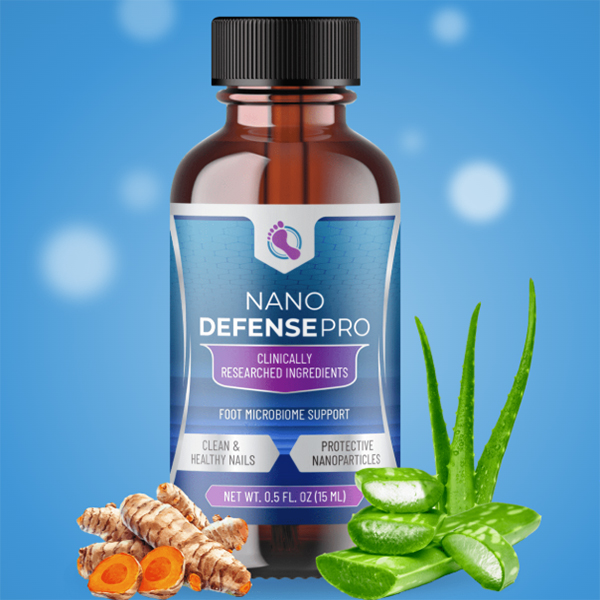
What NanoDefense appears to be
One of the first things worth clarifying is format. The older overview-style copy often labels NanoDefense too broadly, but the public-facing material now circulating online usually presents it as a topical formula tied to nails, surrounding skin, and overall appearance support. The recurring language points to a serum or dropper routine, with instructions framed around applying the liquid to the target area rather than swallowing capsules.
That matters because it changes how a review should be read. The main public claims around NanoDefense revolve around surface appearance, nail condition, comfort, and a nano-sized delivery concept. Readers looking for NanoDefense complaints or NanoDefense legit discussions are usually trying to answer a more practical question: does the public material describe a clearly defined product, or does it mostly repeat aspirational marketing? In NanoDefense’s case, the answer sits somewhere in the middle. There is a recurring product story, but the way it is described can shift noticeably from page to page.
That is why a careful review is more useful than a blunt verdict. The goal here is not to declare that every claim is true or false. It is to show what the public presentation consistently emphasizes and where the description becomes less concrete.
Ingredients and formula notes readers usually want first
If you are searching for NanoDefense ingredients or NanoDefense formula details, the most useful takeaway is that public materials repeatedly lean on a nano-ingredient narrative. Across public-facing pages, the most commonly mentioned components include nano-silver, nano-curcumin, nano-quercetin, luteolin, DNase, and Cape Aloe. Those names appear often enough to form the core public formula story.
At the same time, not every public listing describes the product with exactly the same ingredient emphasis. Some retail-style pages present a more conventional oil-and-extract profile, mentioning ingredients such as tea tree oil, aloe, almond oil, or lemongrass. That does not automatically prove a problem, but it does create a review-level question: are all pages describing the same version, the same packaging cycle, or the same label? A careful buyer should not assume so without checking the current checkout page and bottle image directly.
From a review perspective, this is one of the most important points on the page. The public materials make the idea of the formula clear, but they make the final exact label less consistently clear than ideal. That is why NanoDefense review searches often overlap with NanoDefense what to know and NanoDefense legit queries. People are often reacting to that gap between the broad promise and the fine details.
What public materials emphasize
- A topical routine tied to nails and surrounding skin
- A nano-sized delivery or penetration angle
- Appearance-oriented language around clearer, stronger-looking nails
- Repeated mention of silver, curcumin, quercetin, aloe, and related support ingredients
Why this deserves a closer check
- Ingredient descriptions are not perfectly uniform across public pages
- Some pages sound cosmetic, others sound closer to wellness marketing
- Application instructions vary in tone and detail
- Readers should confirm the current label on the live product page before ordering
What can be verified directly from the public-facing material
A strong review should separate broad promises from what can actually be checked. In NanoDefense’s case, several points do appear repeatedly enough to count as visible public information rather than one-off copy fragments.
- Format: NanoDefense is usually described online as a liquid or serum-style product applied topically.
- Routine angle: public instructions commonly frame it as a short daily or twice-daily habit rather than a complex multi-step treatment.
- Positioning: the sales language consistently focuses on nail appearance, surrounding skin condition, and a nano-technology story.
- Commercial structure: public pages often reference bundle ordering, bonuses on larger packages, and a money-back window, though the exact details should still be confirmed at checkout.
Those points are enough to understand why NanoDefense ranks or circulates in nail-care searches. They are not enough, by themselves, to settle every review question. That is where the next two sections matter.
What seems clear
The clearest part of the NanoDefense story is the kind of promise being made. Public materials do not mainly frame it as a medical treatment page. They frame it as a product meant to support the appearance and condition of nails and nearby skin, often with language about cleanliness, comfort, resilience, or a smoother-looking nail surface over time.
It is also fairly clear that the marketing depends heavily on the nano concept. Whether pages describe silver, curcumin, quercetin, enzymes, or botanical support, the message is similar: the formula is presented as being able to reach areas conventional products may miss. That is the main public mechanism story readers will encounter again and again when searching NanoDefense review terms.
Finally, it is clear that many search results are not truly neutral reviews. They are often advertorial pages, cloned sales angles, or checkout-adjacent content. That makes a measured reading more important. If you are trying to understand NanoDefense complaints or NanoDefense side effects, the first useful step is not to trust the loudest page. It is to find the stable details the loudest pages all keep repeating.
What still needs checking before you rely on the marketing
This is the most important review section on the page. The public material does not leave every practical question equally clear, and that is exactly why review-style searches keep appearing.
Questions worth verifying
- The exact current ingredient label and whether it matches the page you are reading
- The most current application directions for the product version being sold
- The active refund window shown during checkout
- Which countries or shipping regions are currently supported
Why readers pause here
- Different public pages do not always present the same level of specificity
- Return terms and bundle language can look different across pages
- Some review pages sound like marketing summaries rather than real analysis
- Searchers often want clarity, not just stronger claims
There is also the common search overlap with words like legit, complaints, and side effects. Public materials do not give a rich independent evidence trail for those topics. What they mostly provide is product positioning, routine guidance, and commercial reassurance. That does not make NanoDefense inherently problematic, but it does mean readers should treat confident one-line verdicts with caution. A better approach is to verify the label, inspect the order page, and check the policy language directly before relying on any glowing review headline.
Public policy, support, and order-path notes
NanoDefense pages commonly reference shipping, discounts, bundle logic, and a money-back guarantee, but this review is not trying to turn those points into a sales pitch. The important editorial point is simpler: policy information exists in public-facing materials, but it is not always summarized in a perfectly consistent way across the broader web. That is especially true when third-party review pages or mirror sites are involved.
For that reason, the practical next step is not to rely on an old reposted article or a generic “top review” page. It is to compare the live checkout presentation with the fuller internal guide, where the buying path, bundle structure, shipping notes, and return language can be reviewed more carefully in one place.
NanoDefense review FAQ
Is NanoDefense presented more like a supplement or a topical product?
Public-facing pages usually describe NanoDefense as a topical nail and skin formula, often in serum or dropper form, rather than as a standard capsule-based supplement.
What ingredients are publicly mentioned most often in NanoDefense materials?
The recurring ingredient story usually includes nano-silver, nano-curcumin, nano-quercetin, luteolin, DNase, and Cape Aloe, although some public listings mention a different supporting mix of oils or extracts.
Does this NanoDefense review confirm that the product works?
No. This page does not make a product-level efficacy claim. It is a review of how NanoDefense is publicly presented, what appears verifiable, and what still deserves a closer look before purchase.
Why do NanoDefense review searches often include legit, complaints, or side effects?
Because readers are usually trying to move past generic sales language and check whether the public information is consistent, specific, and clear enough to trust. That is a research question more than a verdict question.
Where to go next if you want the fuller picture
If this review has done its job, you should now have a clearer sense of what NanoDefense appears to be, which ingredients are publicly emphasized, and where the visible material becomes less precise than ideal. The next step is not another dramatic review page. It is the fuller guide that lays out the purchase-path information more directly and in a less cluttered way.
Use the internal guide for the more practical layer: current ordering flow, bundle context, shipping notes, and the return-policy path attached to the product page you are actually considering.